
Financing
Building your dream home starts here
Building your dream home starts With having the right financing

Haven’t found your dream home yet?
Check out our customizable floor plans
Qualifications
Meeting Funding Requirements
These qualifications are based on the criteria that most financial institutions follow. Each lender may have their own specific requirements.
Dept-to-Income
30% Mortgage Payment
15% Other Debts
45% Total (Based on Gross income)
Credit Score
680 or higher to qualify. 720 or higher for best rates.
Stable Income
Documentation of at least 2 years of steady, reliable income.
Down Payment
Usually 20-25% of the total project cost is required.
Financial advantages of panelized and Modular homes
Panelized and modular construction offer clear financial advantages, largely driven by speed and efficiency. Shorter build timelines mean less time paying interest on construction loans, which can result in significant savings. Faster completion also allows homeowners to move in sooner or investors to start generating rental income earlier.
In addition, panelized construction reduces material waste, labor inefficiencies, and costly delays, helping keep projects on budget. With more predictable timelines and pricing, builders and homeowners benefit from greater cost certainty and reduced financial risk.
Understanding your financing options
Financing a panelized or modular home typically starts with a construction loan. To qualify, you’ll usually need to work with a licensed General Contractor who will guide the project through the full building process, from initial construction to the Certificate of Occupancy. Once construction financing is in place, borrowers generally choose between two main options: a one-time close (construction-to-permanent) loan or a two-time close loan.
A one-time close loan combines construction financing and the long-term mortgage into a single loan, simplifying the process and reducing closing costs. A two-time close loan involves separate loans for construction and the mortgage, which can offer more flexibility but requires an additional closing.
Additional financing may also be needed for land, site preparation, and other project-specific costs. Working with lenders familiar with offsite construction helps ensure the process runs smoothly.
Construction Loan Options:
Do You Own Land?
Traditional Construction Loan
If you don’t already own land, a traditional construction loan can finance both the land purchase and the construction of your home in one package. This type of loan typically covers the cost of the lot, site work, and the build itself. During construction, you’ll usually make interest-only payments, and once the home is complete, the loan either converts into a mortgage or is refinanced into one.

Construction refinance Loan
If you already own your land, either outright or with an existing loan, you can take out a construction loan specifically for the home build. In many cases, the land can be used as equity toward the project, which may reduce the amount of cash needed upfront. Like other construction loans, payments are typically interest-only during the build, followed by conversion or refinance into a traditional mortgage once construction is complete.
Construction Loan
Closing Options
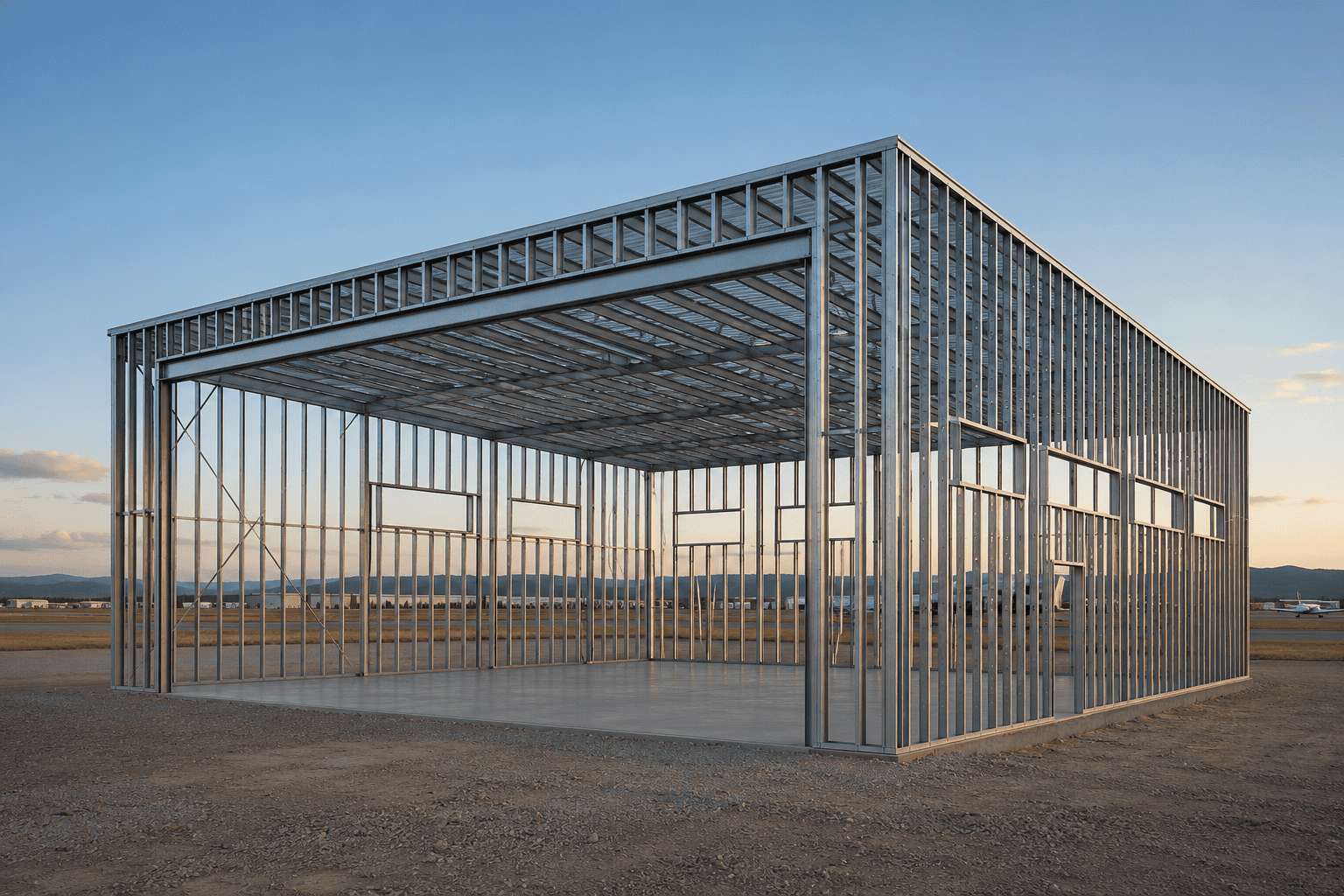
One-Time close
One-time close allows you to combine construction and mortgage financing into one loan, saving on closing costs and securing interest rates upfront
Two-time close
Two-time close requires separate construction and mortgage loans. This means more flexibility and ability to get lower interest rates later, however you have to pay closing costs twice.
Building an Investment property?
Whether you’re developing a rental, second home, or multi-unit project, panelized and modular construction can help you build faster and maximize returns. Financing options and project structure can vary widely, so it’s important to align your approach with your investment goals. Connect with our team to walk through your project and explore the best strategy.
